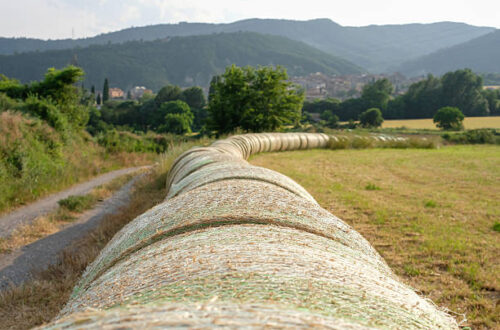

Bale Wrap’ Optimizing Pre-Stretch for High-Speed Wrappers
High-speed baling and wrapping operations depend on achieving greater coverage from each roll without sacrificing bale protection. For Australian custom harvesting contractors, bale wrap performance is closely linked to pre-stretch settings, film gauge, wrapper speed and the condition of the bales being wrapped. Running film at roughly 55% to 70% pre-stretch can improve yield, but only when the wrapper, film and crop conditions are correctly matched.
Excessive stretching can cause tear-outs, weak overlaps and uneven coverage. The goal is not simply to stretch the film as far as possible, but to achieve consistent tension and reliable sealing throughout long wrapping runs.
Understanding Pre-Stretch and Film Yield
Pre-stretch is the controlled elongation applied to plastic film before it reaches the bale. A wrapper’s pre-stretch rollers determine how much the film is extended, allowing a roll to cover more bale surface than it would at its original length.
For contractors, the practical benefit is greater film yield per roll. However, increasing the percentage does not automatically reduce operating costs. If the film becomes too thin or loses its ability to recover around the bale, the risk of punctures and air ingress can increase.
The appropriate setting depends on the manufacturer’s film specification and wrapper design. The pre-stretch percentage for silage bale wrap used by Australian operators should therefore be treated as a working range rather than a universal setting.
Balancing 55%–70% Pre-Stretch
A setting around 55% may provide a useful starting point when conditions are demanding, particularly where crop residue, sharp stems or rough bale surfaces increase the risk of film damage.
Higher settings approaching 70% can increase coverage and reduce the amount of film required per bale, provided the product is designed for that level of pre-stretch. Contractors should avoid increasing tension to achieve maximum yield.
Key factors to monitor include:
● Film gauge: Thinner films require careful handling and correct tension.
● Pre-stretch percentage: Higher settings increase elongation but can reduce film thickness if pushed beyond the product’s intended range.
● Overlap: Consistent overlap is essential for creating an effective oxygen barrier.
● Wrapper speed: Film delivery must remain stable as bale throughput increases.
● Bale shape: Dense, evenly formed bales are easier to wrap consistently.
● Weather: Heat can affect film handling, tack and stretching characteristics.
Watch for Film Thickness Changes
Pre-stretch changes the film’s physical dimensions. As the material elongates, its thickness decreases. If stretching becomes excessive, the film may become more vulnerable to punctures or fail to maintain sufficient tension around irregular bale surfaces.
A good agricultural film setup therefore balances elongation against the film’s specified performance characteristics. Contractors should use the manufacturer’s recommended pre-stretch range rather than relying solely on maximum roller tension.
Setting Up for High-Speed Wrapping
High-speed wrappers require consistent film delivery. Before a major harvesting run, inspect the pre-stretch rollers for contamination, wear or incorrect adjustment. Damaged rollers can create uneven tension, causing the film to stretch inconsistently across its width.
Operators should also check the film path and ensure the roll is correctly installed. During the first bales of a run, inspect the finished wrap for loose sections, excessive thinning, tearing and inconsistent overlap.
If problems appear, make one adjustment at a time. Changing wrapper speed, film tension, and overlap at the same time makes it difficult to identify the source of the problem.
Protecting Seal Integrity
Stretch performance is only useful if the wrapped bale remains sealed. The film should maintain sufficient tension to conform closely to the bale, while its adhesive or tack properties allow adjoining layers to bond effectively.
This is especially important for Australian contractors working across variable conditions, from dry inland districts to wetter dairy regions. Bale surface condition, crop moisture and handling practices can all affect the final seal.
Conclusion
Optimising bale wrap pre-stretch is about striking the right balance among film yield, thickness, tension, and protection. The 55%–70% range can provide useful operating flexibility, but the correct setting depends on the film specification, wrapper and field conditions.
Before increasing pre-stretch, check the manufacturer’s recommendations, inspect roller condition and monitor completed bales for consistent coverage and sealing. Test your settings on a small run, measure film usage and inspect the finished bales before committing to a full harvesting shift.
—
FAQs
1. What pre-stretch percentage should bale wrap use?
The correct setting depends on the film and wrapper. A 55%–70% range may suit some systems, but operators should follow the film manufacturer’s specified range.
2. Does higher pre-stretch mean better film yield?
Higher pre-stretch can increase film coverage per roll, but excessive stretching can reduce effective film thickness and increase the risk of tearing or inadequate protection.
3. Why does bale wrap tear during high-speed wrapping?
Common causes include excessive pre-stretch, damaged rollers, sharp bale surfaces, incorrect film installation, excessive tension, or film unsuitable for the operating conditions.
4. How does pre-stretch affect film thickness?
As film is elongated, its thickness decreases. Excessive stretching can therefore produce a thinner film layer than intended and potentially reduce puncture resistance.
5. How can contractors improve wrapping consistency?
Use compatible film and wrapper settings, inspect prestretch rollers regularly, maintain consistent bale density and check completed bales for tension, overlap, tears and seal quality.


You May Also Like

Stockinette Bags: Combining Sustainability with Practicality for Everyday Use
Stockinette Bags Usage Guide’ Australian Best Practices for Handling, Storage, and Transport Efficiency